

No Deposit
Free Spins
Pay by Phone
OTT Voucher
Instant EFT
High Roller
Bonuses SA
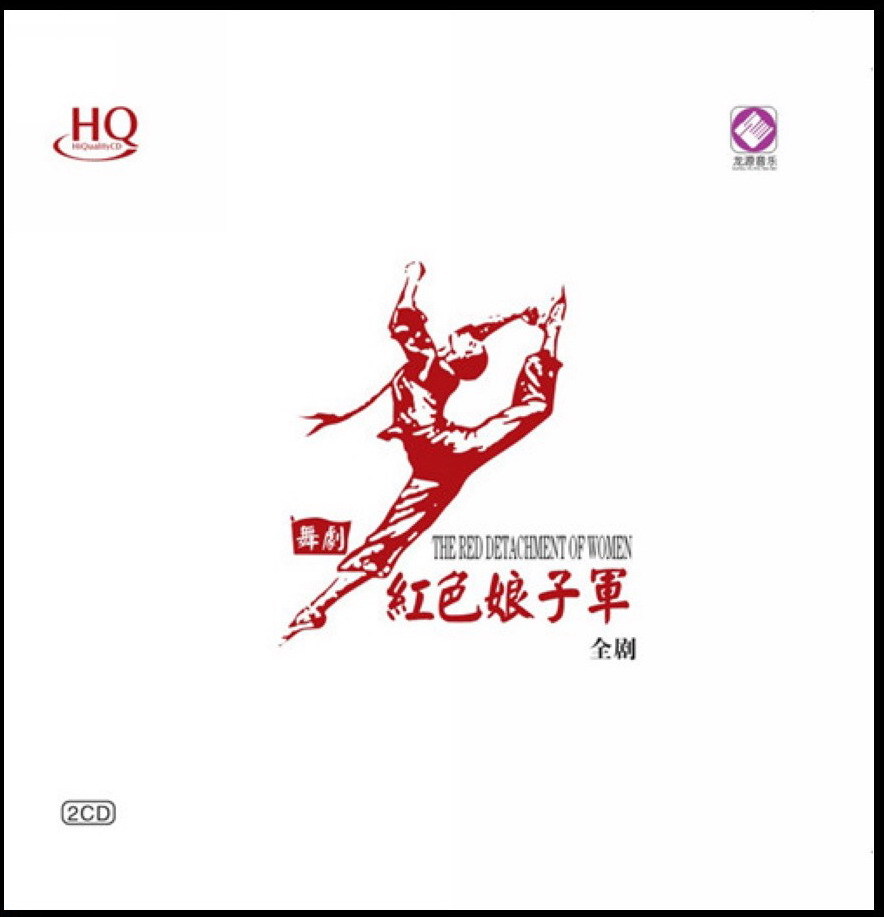
The Red Detachment of Women is a six-act ballet adapted by the China Central Ballet Troupe from the screen-play of the same title by Liang Xin. Choreography was by Li Chengxiang, Jiang Zuhui and Wang Xixian and the music by Wu Zuqiang, Du Mingxin, Wang Yanqiao, Shi Wangchun and Dai Hongwei. The ballet was first staged in Beijing in 1964.
Since its first performance The Red Detachment of Women has proved popular with Chinese musicians and dancers, as well as with the public. It was hailed in China as the first Revolutionary Ballet and danced by other companies throughout the whole country. The work received still wider currency with a film version in the early 1970s featuring the China Central Ballet Troupe.
The music of The Red Detachment of Women, which includes some of the best known melodies in China, characterizes the hero Hong Changqing and the heroine Wu Qinghua in clear terms and makes good use of folk-melodies from Hainan Island. These last elements are heard, for example, in the Dance of the Li Tribe in Act 3. The orchestra includes a number of traditional Chinese instruments, the lusheng, sheng (Chinese reed-pipe instrument), zhudi, haidi (Chinese flutes), suona (Chinese oboe), pipa (Chinese lute), liuqin, zhongruan, dasanxian (plucked instruments) and bangu, xiaotanggu, jingluo and xiaoluo (Chinese percussion instruments), all of which enrich the score and add local colour.
Track list
CD1
01. Overture
02. Prelude
03 – 05. Scene 1: Changquing give direction to the Red Zone
06 – 08. Scene 2: Quionghua complains and join the Red Army
09 – 12. Scene 3: Work together to make a night attack on bandit’s lair
CD2
01 – 07. Scene 4: The Party nurtures heroes so Army and People are one family
08 – 11. Scene 5: Block in the pass and fight enemy bravely
12. Interlude
13 – 14. Scene 6: Go foward on the martyr’s bloodstain
Central Ballet Symphony Orchestra, Chinese Opera and Dance Theatre Chorus
Zhang Yi (conductor)
FLAC
https://mega.nz/#!vIt1TSaS!xEb5LjV2aa_sJ4LBknr5ijsCb3I9SpB4V6DzVXIf_YM
Great share and a great new production of this. I may need to point out though, that this is an orchestra-only recording, excluding all the folk instruments. Also, the music of the 1964 premiere and the much-revised 1970 version has many differences, some of them even rewrites. This version incorporates music from both versions, with the majority being the revised one. Listen to the 1964 section on Disc 1 Track 08 (Quionghua complains and join the Red Army – part 3), the scene begins at 1:40, and the 1964 scoring is from here to the end of the track.
Despite its obvious political intentions, the music is quite dramatic, reminding me of, among other things, Golden Age Hollywood film scoring. 🙂 Happy listening!